Propuesta de Nuevas Viviendas Asequibles Para Familias de Trabajadores Agrícolas
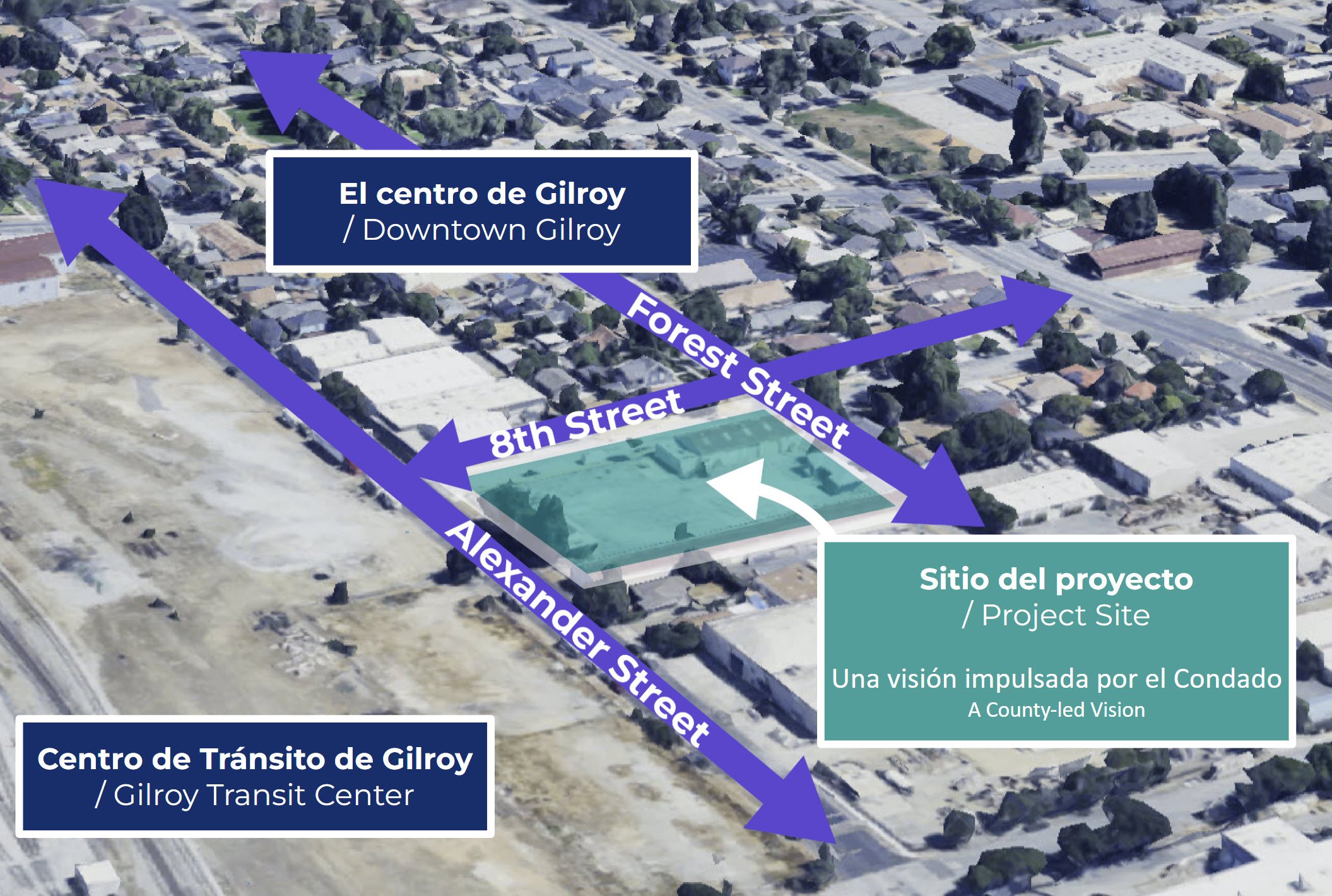
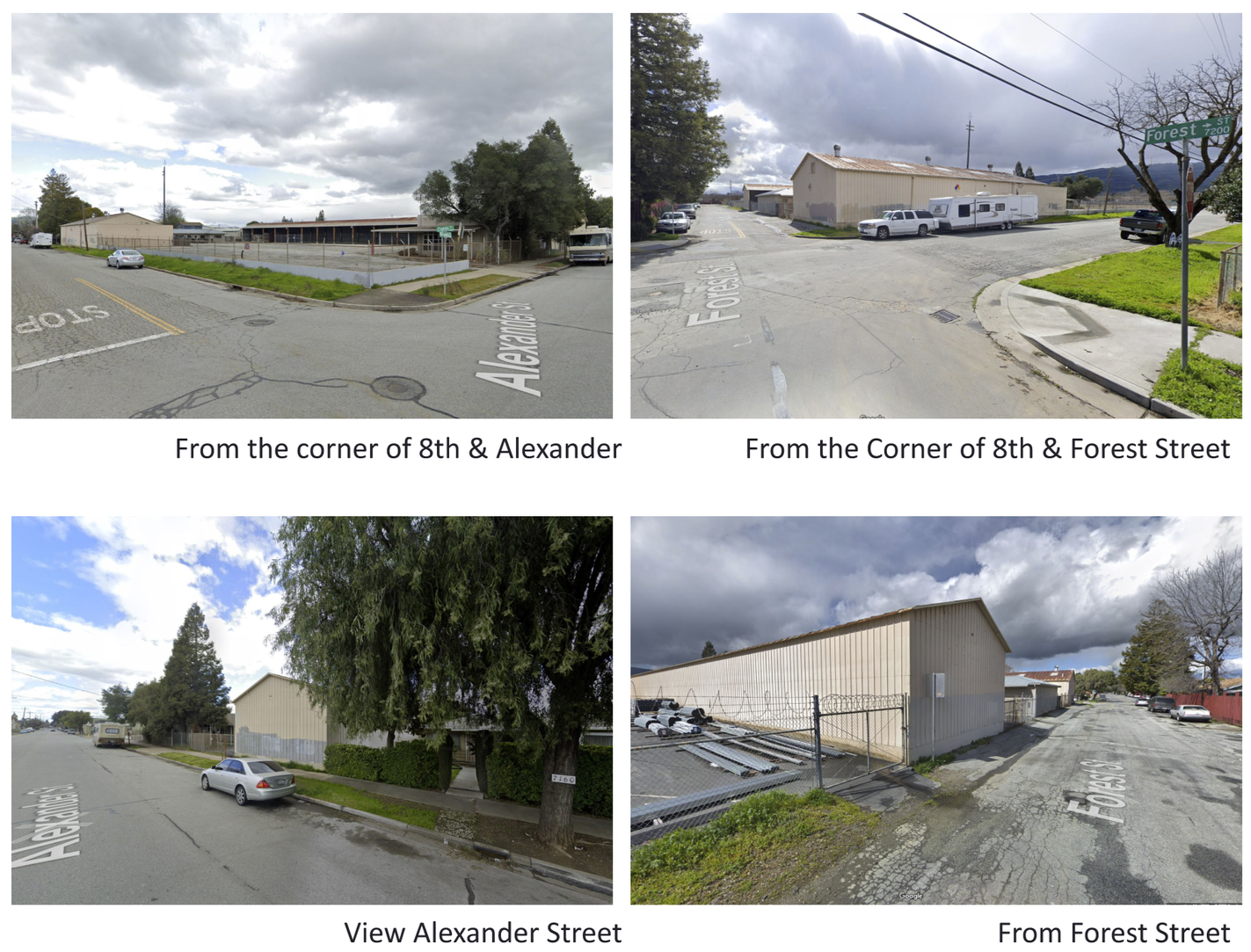
📍 E 8th St & Forest St, Gilroy, CA 95020
(Anteriormente conocido como el proyecto de viviendas 8th & Alexander)
Proposed New Affordable Housing for Agricultural Worker Families
📍 E 8th St & Forest St, Gilroy, CA 95020
(Previously known as 8th & Alexander Housing)
Presentado por / Brought to you by:

Project Sponsors:
Ayúdenos a imaginar una comunidad vibrante donde las familias y los trabajadores agrícolas puedan prosperar cerca del corazón del centro de Gilroy.
Help us envision a vibrant community for families and agricultural workers to thrive near the heart of downtown Gilroy
¡Participe con Nosotros!
¡Ayúdenos a dar forma al futuro de 8th & Forest!
El terreno ubicado en la intersección de 8th Street y Forest Street en Gilroy, que ha permanecido desocupado durante casi una década, representa una importante oportunidad para crear viviendas asequibles, estables y de alta calidad para familias, con un enfoque en las necesidades de los trabajadores agrícolas, quienes sostienen nuestros sistemas alimentarios y la economía local, pero enfrentan algunos de los mayores desafíos de vivienda en la región.
Este esfuerzo, liderado por la Autoridad de Vivienda del Condado de Santa Clara y Engage FORA, en colaboración con la Oficina de Vivienda de Apoyo del Condado de Santa Clara, pone en el centro las voces de los trabajadores agrícolas y sus familias para asegurar que sus experiencias de vida orienten directamente el diseño, las amenidades y la visión a largo plazo de esta comunidad. A través de un proceso de participación comunitaria inclusivo y cuidadosamente diseñado, el proyecto busca crear, junto con la comunidad, un lugar que refleje la resiliencia, la cultura y las necesidades de las personas para quienes está destinado.
Secciones de esta página
Detalles del Proyecto / Próximos Eventos / Participe en la Conversación / Resumen de la Participación Comunitaria
Eventos Anteriores (próximamente) / Preguntas Frecuentes (próximamente) / ¿Quiénes se Benefician de la Vivienda Asequible?
Engage with us!
Help shape the future of 8th & Forest!
The site at 8th & Forest Street in Gilroy, vacant for nearly a decade, presents a important opportunity to create stable, high-quality affordable housing for families, with a focus on housing for agricultural workers—people who sustain our local food systems and economy yet face some of the most severe housing challenges in the region.
Led by the Santa Clara County Housing Authority and Engage FORA, in collaboration on with the County of Santa Clara Office of Supportive Housing, this effort centers the voices of agricultural workers and their families, ensuring lived experiences directly shape the design, amenities, and long-term vision for the community. Through a thoughtful, inclusive engagement process, the project aims to co-create a place that reflects the resilience, culture, and needs of the people it is meant to serve.
Sections on this page
Project Details / Upcoming Events / Join the Conversation / Community Engagement Overview/
Past Events (coming soon) / FAQs (coming soon) / Who Benefits from Affordable Housing?
/ Información General:
La agricultura desempeña un papel fundamental en la economía del sur del Condado de Santa Clara, al generar más de 8,000 empleos locales y aportar más de $1.6 mil millones a la economía cada año. A pesar de ello, existe una importante escasez de viviendas para trabajadores agrícolas. Se estima que el Condado de Santa Clara necesita aproximadamente 700 viviendas permanentes y 1,400 viviendas para trabajadores agrícolas de temporada.
Muchos trabajadores agrícolas perciben ingresos que no les permiten acceder a viviendas a precio de mercado en la región. Con un ingreso anual promedio de alrededor de $23,700, y alquileres típicos en el área de Gilroy que oscilan entre $2,500 y $3,000 al mes, los costos de vivienda pueden representar más del 60% del ingreso de un hogar.
Este proyecto busca contribuir a atender esta necesidad mediante la creación de viviendas asequibles de alta calidad, diseñadas para apoyar a los trabajadores agrícolas y sus familias. A través de un proceso de participación comunitaria que prioriza la accesibilidad, la inclusión, la seguridad y la capacidad de respuesta a las necesidades de la comunidad, el proyecto pretende desarrollar viviendas que reflejen las prioridades y experiencias de las personas a quienes están destinadas.
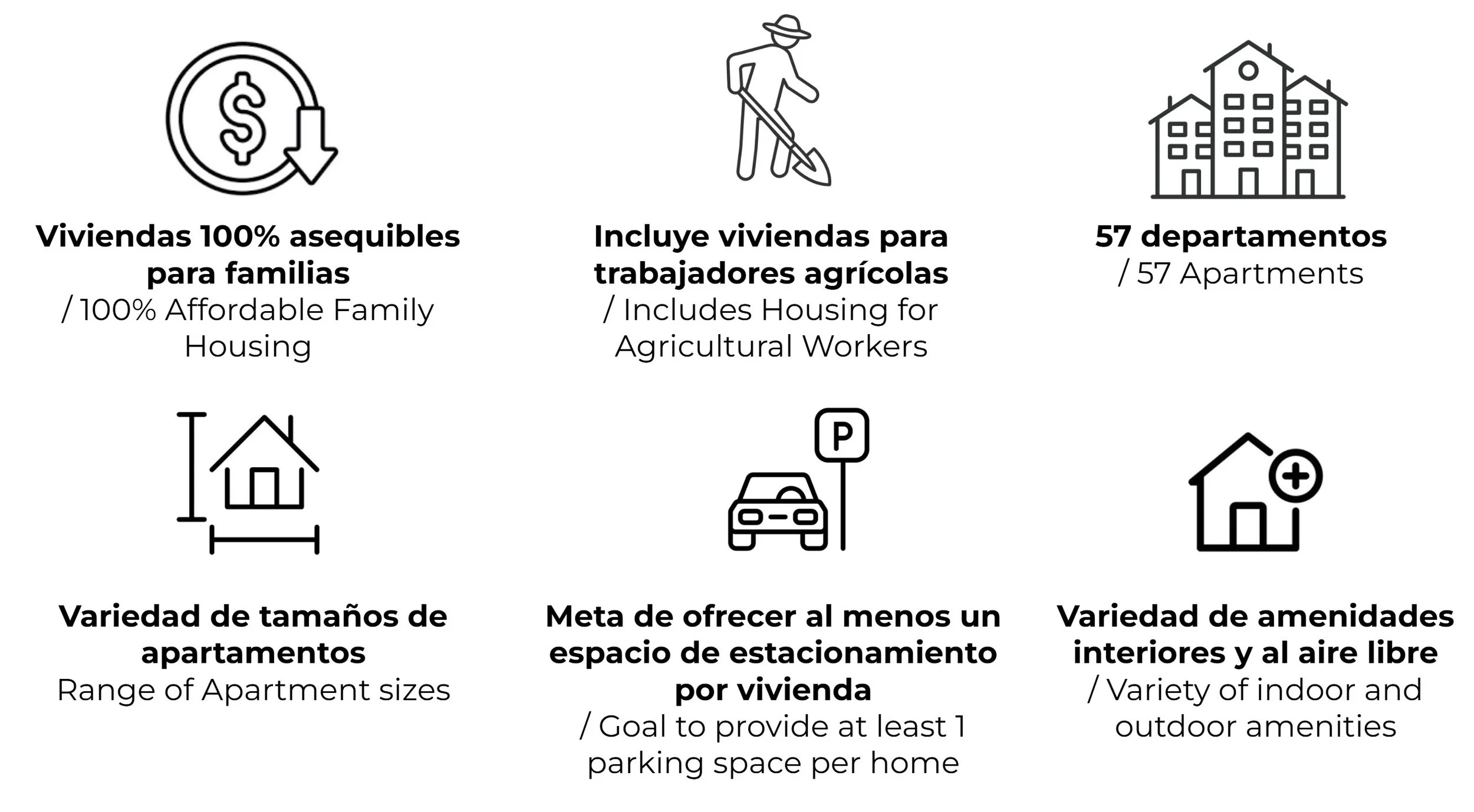
/ At a Glance:
Agriculture plays a critical role in South Santa Clara County’s economy, supporting over 8,000 local jobs and generating more than $1.6 billion in annual output. Despite this, there is a significant shortage of housing for agricultural workers, with an estimated need for approximately 700 permanent homes and 1,400 seasonal homes across Santa Clara County.
Many agricultural workers earn incomes that are not sufficient to afford market-rate housing in the region. With average annual earnings around $23,700, and typical rents in the Gilroy area ranging from $2,500 to $3,000 per month, housing costs can exceed 60% of a household’s income.
This project aims to help address this need by providing high-quality, affordable housing designed to support agricultural workers and their families. Through a community engagement process that prioritizes accessibility, inclusivity, safety, and responsiveness, the project seeks to create housing that is aligned with the needs of the people it is intended to serve.
Project Goals:
¡Consulte la Fase de Escucha para conocer los próximos eventos!
See the Listening Phase for Upcoming Events!
/ Participe en la Conversación
Comparta sus ideas💡
¿No puede acompañarnos en persona? ¡No hay problema!
Tómese un momento para compartir sus ideas sobre el proyecto utilizando el breve formulario a continuación. Sus comentarios ayudarán a dar forma a lo que se construirá.
¡Cada pocos meses publicaremos nuevas preguntas! Regrese para mantenerse informado y seguir participando.
Share Your Ideas💡
Can’t join us in person? No problem!
Take a minute to share your thoughts about the project using the quick form below. Your input helps shape what gets built.
New questions are posted every few months—check back to stay involved!
/ Join the Conversation
Stay Connected📬
Sign up to join our email list - where you will receive updates on the project, upcoming events, and opportunities to get involved in shaping what gets built.
NOTE: Your information will only be used to share key project updates. It will not be shared by anyone except the project team.
Manténgase conectado📬
Inscríbase en nuestra lista de correo electrónico para recibir actualizaciones sobre el proyecto, próximos eventos y oportunidades para participar en el diseño de la futura comunidad.
NOTA: Su información se utilizará únicamente para compartir actualizaciones importantes sobre el proyecto. No será compartida con nadie fuera del equipo del proyecto.
/ Proceso de Participación Comunitaria
El diseño es mejor cuando reúne una diversidad de perspectivas. Los proyectos que mejor responden a las necesidades de los futuros residentes, reflejan su comunidad y su entorno, y son verdaderamente valorados por la comunidad, se crean escuchando a las personas a quienes buscan servir e incluyéndolas durante todo el proceso de diseño.
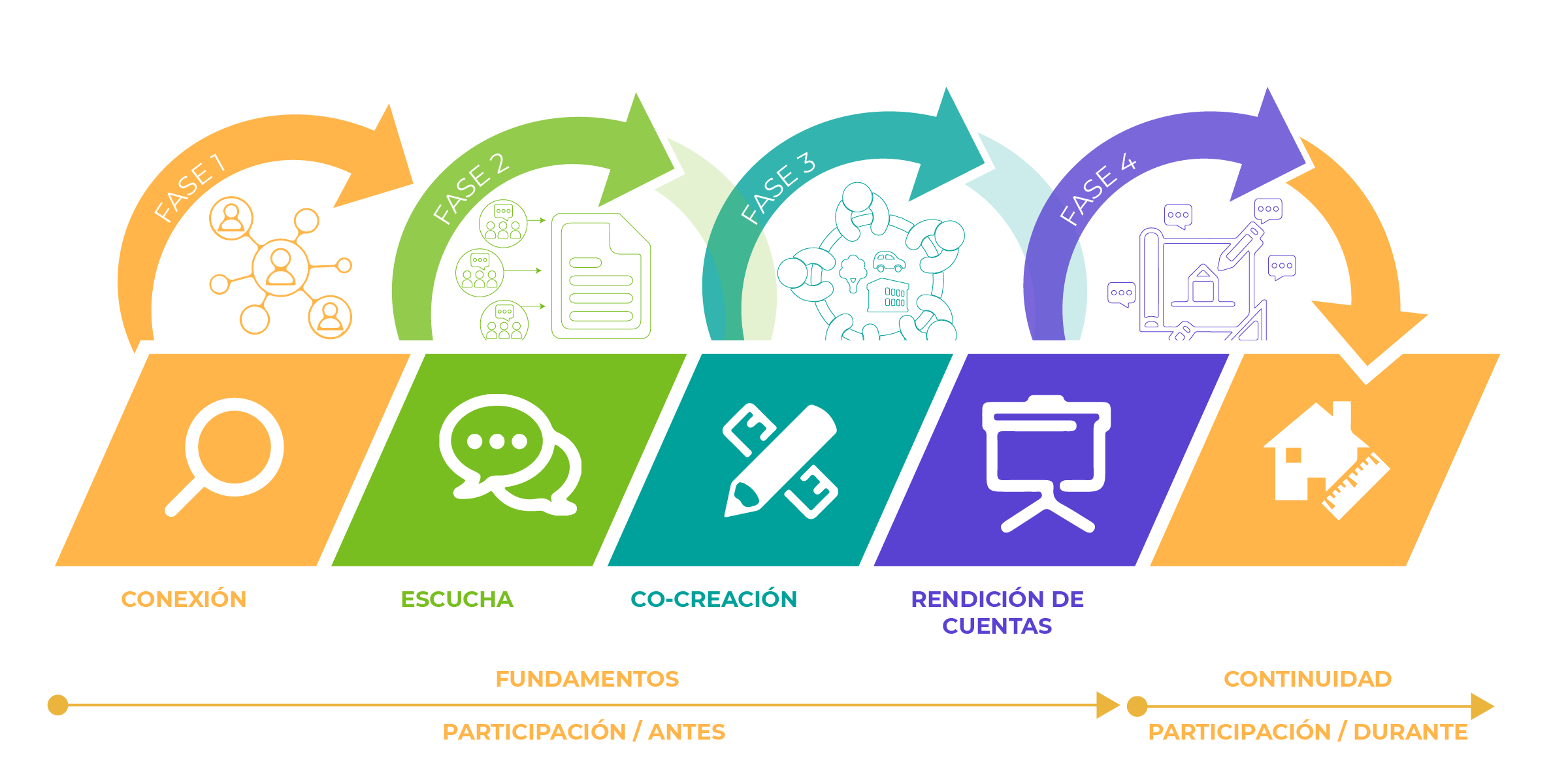
ESTAMOS EN LA FASE 2
Ir a una sección:
1 / Fase de Conexión
2 / Fase de Escucha
3 / Fase de Co-creación (actual)
4 / Fase de Rendición de Cuentas (próximamente)
/ Community Engagement Process
Design is better when diverse perspectives are at the table. Buildings that best provide for the needs of future residents, reflect their community and place, and are deeply valued by the community, are created by listening to those they strive to serve and including them throughout the design process.
WE ARE IN PHASE 2
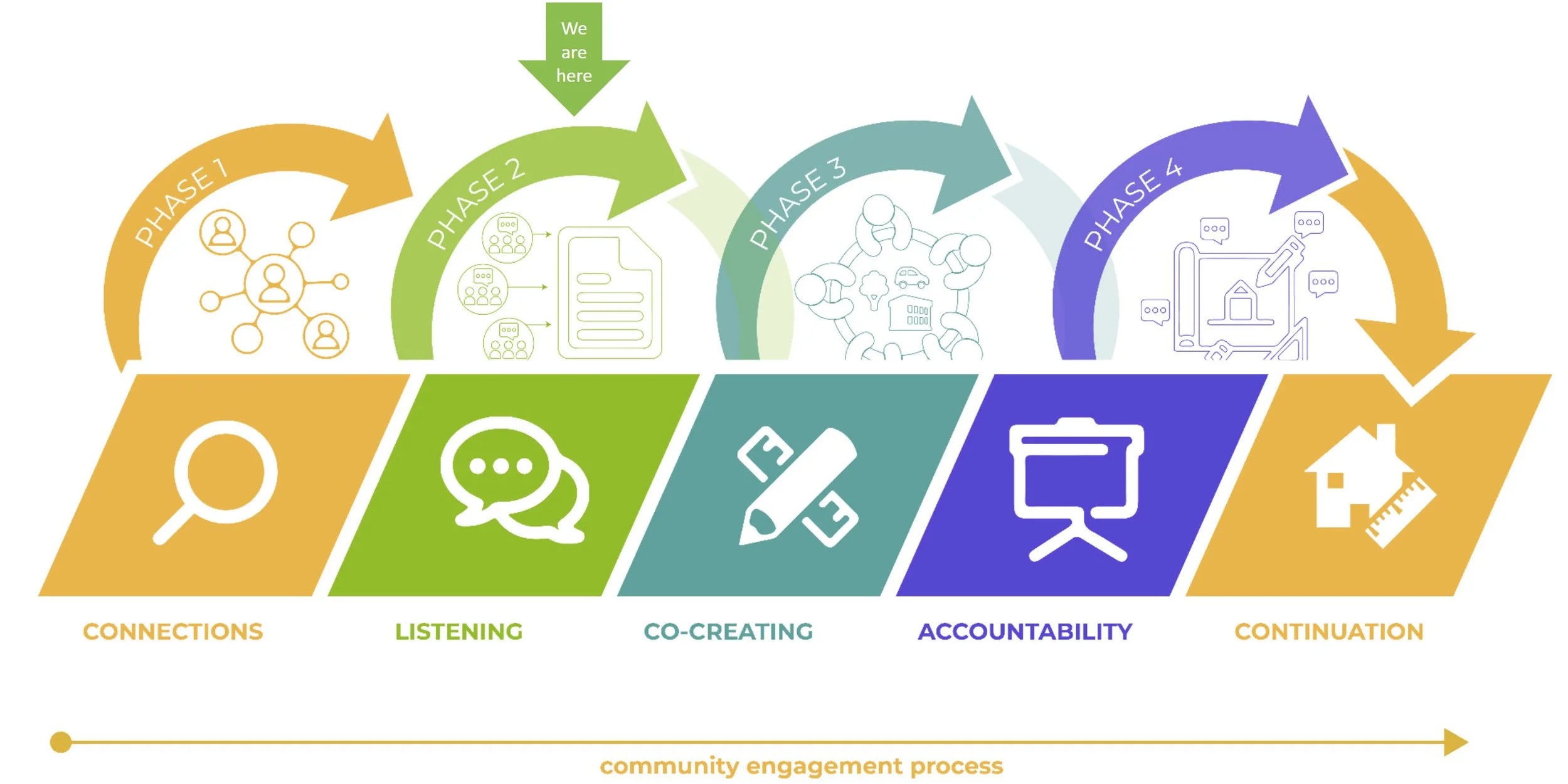
✅Fase 1 / Fase de Conexión
Siempre iniciamos la participación comunitaria desarrollando un entendimiento del contexto del proyecto, incluyendo su ubicación, historia y la comunidad que lo rodea. Durante la Fase de Conexión, entrevistamos a líderes comunitarios, incluyendo organizaciones comunitarias, organizaciones sin fines de lucro, negocios locales y líderes vecinales, para obtener perspectivas y conocimientos específicos de la comunidad.
✅Phase 1 / Connections Phase
We always begin community engagement by developing an understanding of the project’s context, including its location, history, and surrounding community. During the Connections Phase, we interviewed community leaders such as community organizations, non-profits, local businesses, and neighborhood leaders to gain hyperlocal insights.
✅Fase 2 / Fase de Escucha
Actualmente nos encontramos en la primera fase pública del proceso de participación comunitaria: la Fase de Escucha. Esta fase se enfoca en comprender los valores y visiones colectivas de la comunidad. Sus valiosas aportaciones ayudan a garantizar que el proyecto sea diseñado para responder de la mejor manera a las necesidades de la comunidad. Una vez completada esta fase, publicaremos un Informe de Escucha con más detalles y hallazgos del proceso.
Eventos realizados:
✅ Evento emergente de la Feria de Recursos de Vivienda para Trabajadores Agrícolas
14 de mayo de 2026 | Royal Oak Village, Morgan Hill, CA
Nos reunimos con la comunidad local de trabajadores agrícolas para recopilar comentarios y compartir información sobre el proyecto.
✅ Evento emergente del Gilroy EV Ride & Drive
27 de junio de 2026 | 10:30 a. m.–2:30 p. m.
Plaza del Ayuntamiento de Gilroy | Gilroy, CA
Los miembros de la comunidad se reunieron con el equipo del proyecto, compartieron sus prioridades y conocieron más sobre el desarrollo propuesto.
✅ Reunión de Vecinos con Nueva Vida
24 de julio de 2026 | Cafetería de South Valley Middle School
Grupo de enfoque a finales de julio, dirigido por Nueva Vida, para escuchar las opiniones de los vecinos del proyecto.
✅Phase 2 / Listening Phase
We are now in the first public phase of community engagement process, the Listening Phase. This phase is about understanding the community’s collective values and visions. Your critical insights help ensure the project is designed to best serve its community. Once this phase is complete, we will publish a Listening Report sharing more details and findings. Planned events include:
Completed Events:
✅ Farmworker Housing Resource Fair Pop-Up
May 14, 2026 | Royal Oak Village, Morgan Hill, CA
Engaged with the local farmworker community to gather input and share information about the project.
✅ Gilroy EV Ride & Drive Pop-Up
June 27, 2026 | 10:30am–2:30pm
Gilroy City Hall Plaza | Gilroy, CA
Community members connected with the project team, shared their priorities, and learned more about the proposed development.
✅ Nueva Vida Neighbor Meeting
July 24, 2026 | South Valley Middle School Cafeteria
A focus group in late July, led by Nueva Vida, to hear from project neighbors.
✅Fase 3 / Fase de Co-creación
A continuación, entraremos en la Fase de Co-creación, la cual comienza compartiendo los hallazgos, temas principales y valores identificados durante la Fase de Escucha. Una serie de actividades de diseño interactivas ayudará a informar el diseño del proyecto.
Manteniendo un proceso basado en la transparencia y la integridad, el equipo de diseño explicará los requisitos y los factores clave que guían el desarrollo del proyecto, y presentará únicamente opciones que sean viables. A medida que se realicen, se añadirá a continuación un resumen de los Eventos de Co-creación Anteriores.
✅ Taller Comunitario Enfocado en Jóvenes con CARAS
Septiembre de 2026 | Organizado en colaboración con jóvenes y miembros de la comunidad local
✅ Evento de Participación en el Área de Descanso de Trabajadores Agrícolas
Septiembre de 2026 | Conectando con empleadores agrícolas locales y trabajadores agrícolas
✅Phase 3 / Co-creation Phase
Next we will enter the Co-creation Phase, which begins by reporting back the findings and major themes and values heard during the Listening Phase. A series of interactive design activities help inform the project design. Upholding a process based on transparency and integrity, the design team will describe the requirements and key design drivers for the development and only present feasible options. A summary of Past Co-creation Events will be added below as they occur.
✅ CARAS Youth-Focused Community Workshop
September 2026 | Co-led with local youth and community members
✅ Grower Break Room Engagement Event
September 2026 | Connecting with local agricultural employers and workers
🔜Fase 4 / Fase de Rendición de Cuentas
La Fase de Rendición de Cuentas reúne y organiza los valiosos comentarios recibidos de la comunidad durante todo el proceso de participación, identificando los temas y valores principales, y documentando claramente cómo estas aportaciones se integran al diseño del proyecto.
Una vez completada esta fase, se incluirá un informe final a continuación que destacará las prioridades y perspectivas compartidas por la comunidad, y mostrará cómo sus aportaciones han dado forma al proyecto.
🔜Phase 4 / Accountability Phase
The Accountability Phase is a robust effort to gather and organize the valuable feedback we receive from the community throughout the engagement period, distill it into key themes and values, and clearly document how those insights are integrated into the project design. Once complete, a final report will be linked below highlighting the priorities and perspectives shared by the community and illustrating how input has meaningfully shaped the project.
/ ¿Quiénes se benefician de la vivienda asequible?
/ Who Benefits from Affordable Housing?
